Where Faint Light Gathers
Nebulae are where the night sky feels most alive — faint clouds shaped by the birth and death of stars. Just beyond the doorstep, they become quiet challenges that reward patience and intention.
My path began with the Seestar S50, an amazing tool that revealed how much was possible even under bright skies. As my equipment evolved, so did my understanding of these objects and the craft required to coax them into view.
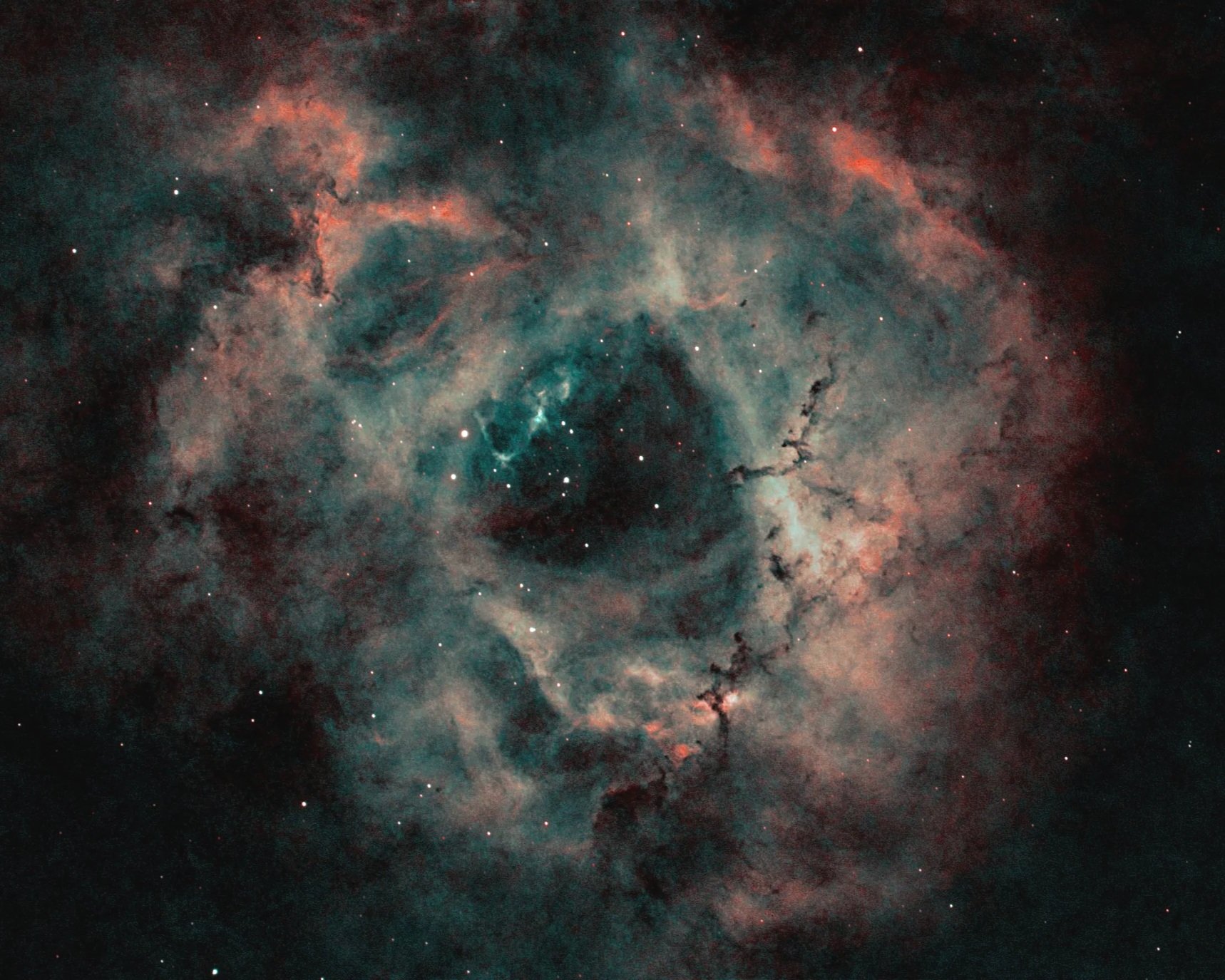
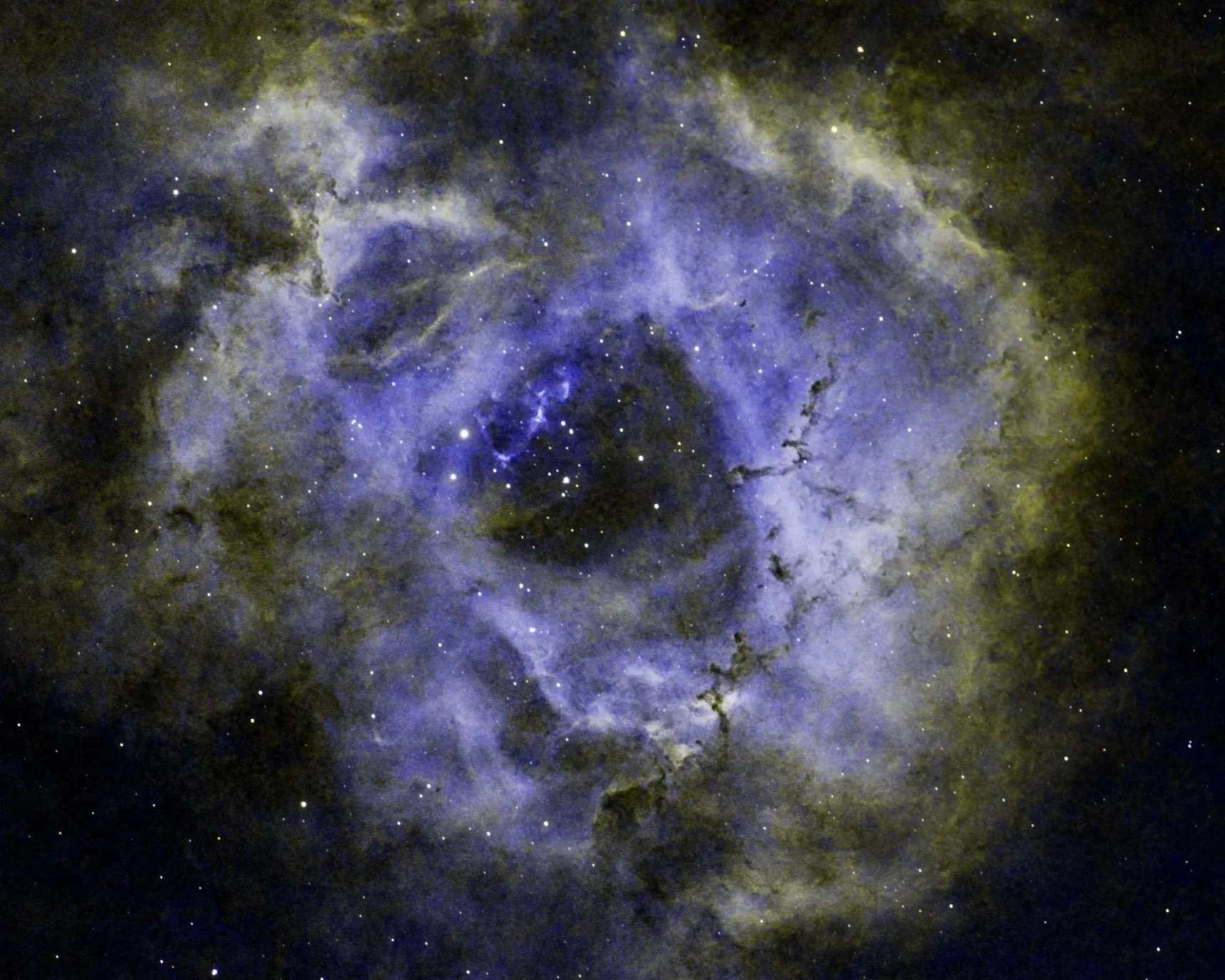
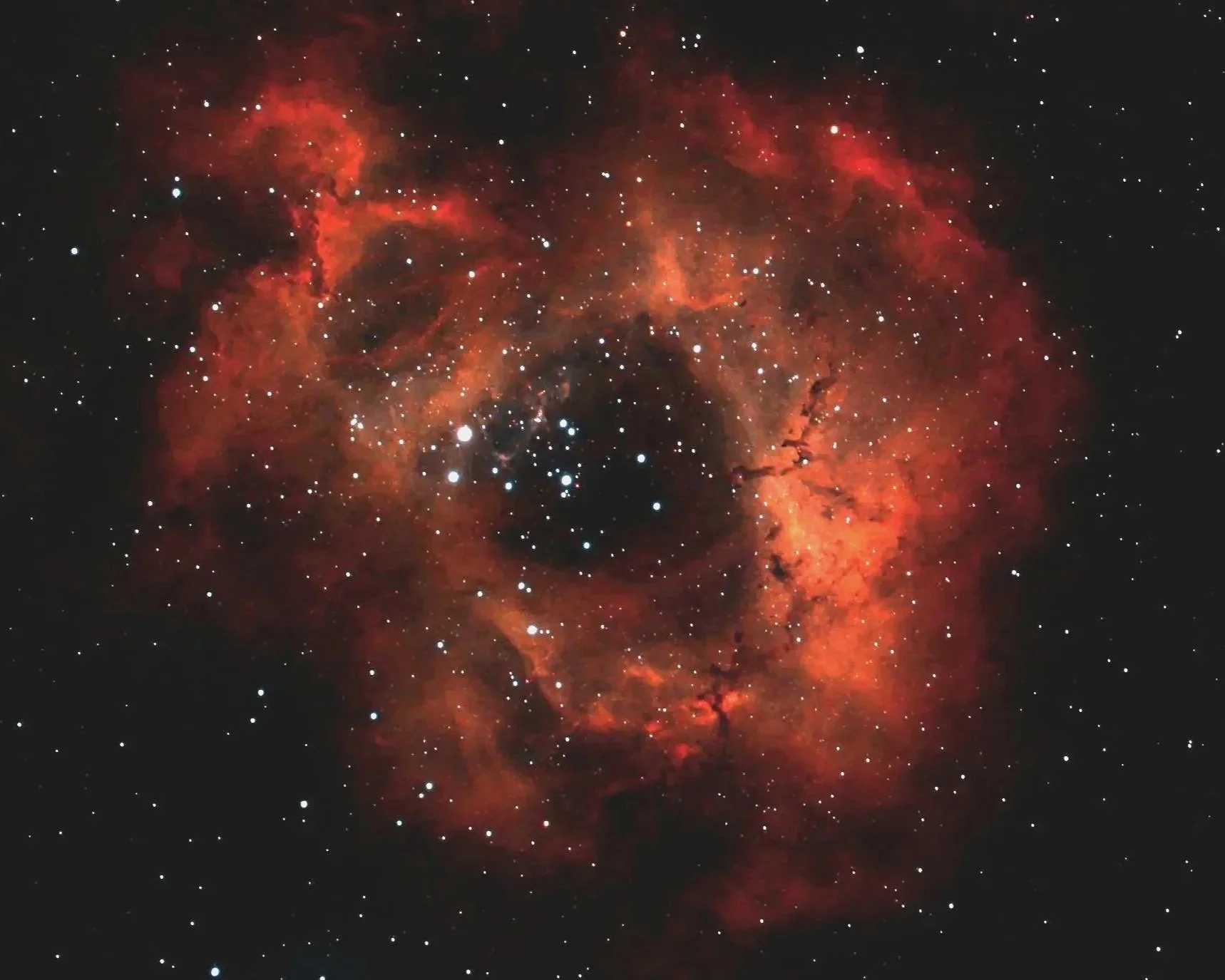
NGC 2237 Rosette Nebula & NGC 2244 Satellite Cluster
Integration: 16 minutes (16 x 60s)
Equipment: Askar FRA300/5.0 APO • ZWO ASI585MC-Air • Explore Scientific iEXOS-100-2
Filters: SVBONY SV220 7nm Dual Band
Acquisition: ASIAIR • ASIAIR guiding
Processing: GraXpert • Siril • GIMP
Notes:
Captured on February 11, 2026. Just 16 minutes of integration—proof that strong emission nebulae deliver fast under Bortle 9. The larger aperture and dual-band filter reveal significantly more detail in the petals and dark rifts than the Seestar S50 version (also in this gallery). 60s subs at gain 250 with dithering (10px every frame). Captured same night as the Horsehead Nebula.
The top image was created using an HOO palette, the middle image was created using a derived SHO (Hubble-style) palette both with custom Siril scripts - from the same integration data as the bottom image. Field Notes ”Painting with Light You Can’t See” have been published to detail the methodology. A free download of the custom Siril python script for HOO/SHO processing is also in this Field Note.
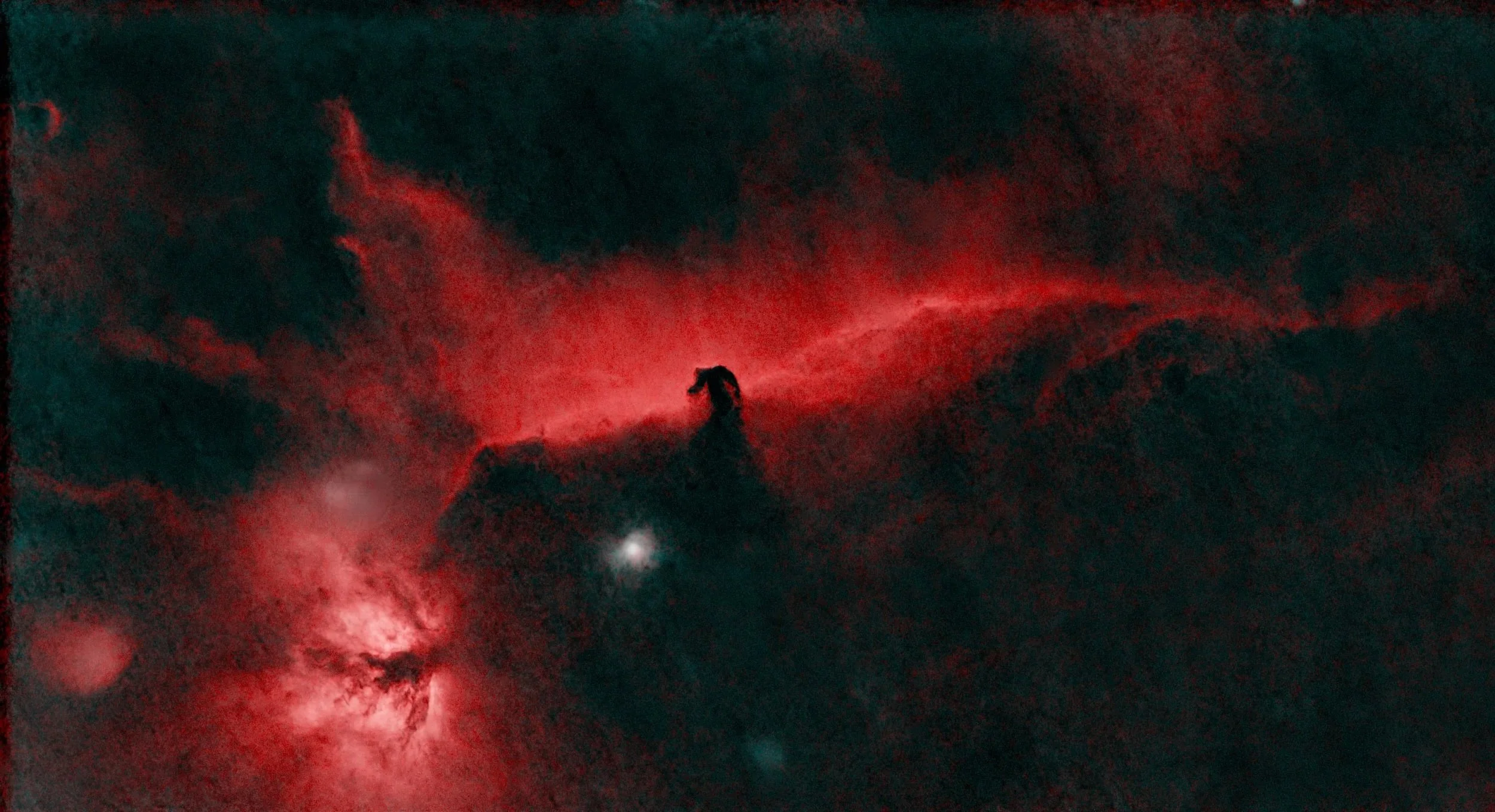
IC 434 Horsehead Nebula
ntegration: 60 minutes (60 x 60s)
Equipment: Askar FRA300/5.0 APO • ZWO ASI585MC-Air • Explore Scientific iEXOS-100-2
Filters: SVBONY SV220 7nm Dual Band
Acquisition: ASIAIR • ASIAIR guiding
Processing: GraXpert • Siril • GIMP
Notes:
Captured on February 11, 2026. The faint IC 434 curtain comes through cleanly with dual-band. Best captured early evening while Orion is high. 60s subs at gain 250. First successful test of new dithering settings (10px every frame).
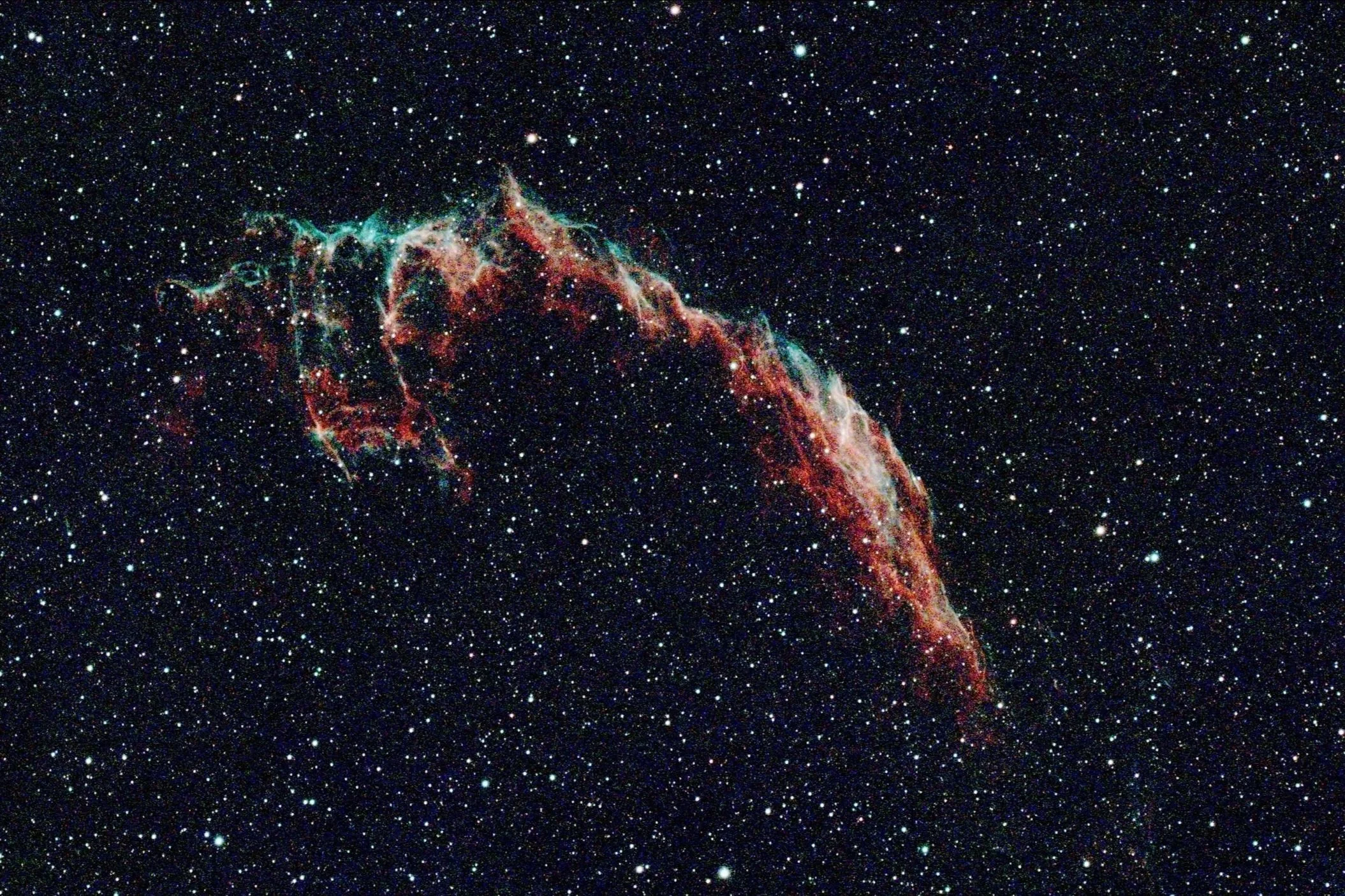
NGC 6992 Eastern Veil Nebula
Integration: 30 minutes (30 x 60s)
Equipment: Askar FRA300/5.0 APO • ZWO ASI585MC-Air • Explore Scientific iEXOS-100-2
Filters: SVBONY SV220 7nm Dual Band
Acquisition: ASIAIR • ASIAIR guiding
Processing: GraXpert • Siril
Notes:
Captured on October 16, 2025. This has become my favorite image so far — the blue‑green OIII filaments rose out of the city glow with a delicacy I didn’t expect.
Under urban skies the OIII signal sits just above the noise floor, asking for restraint: gentle noise reduction, careful color balance, and patience. With a disciplined workflow, faint threads become structure.
The Veil is a reminder that even here, in the bright city, persistence can reveal what the sky tries to hide.
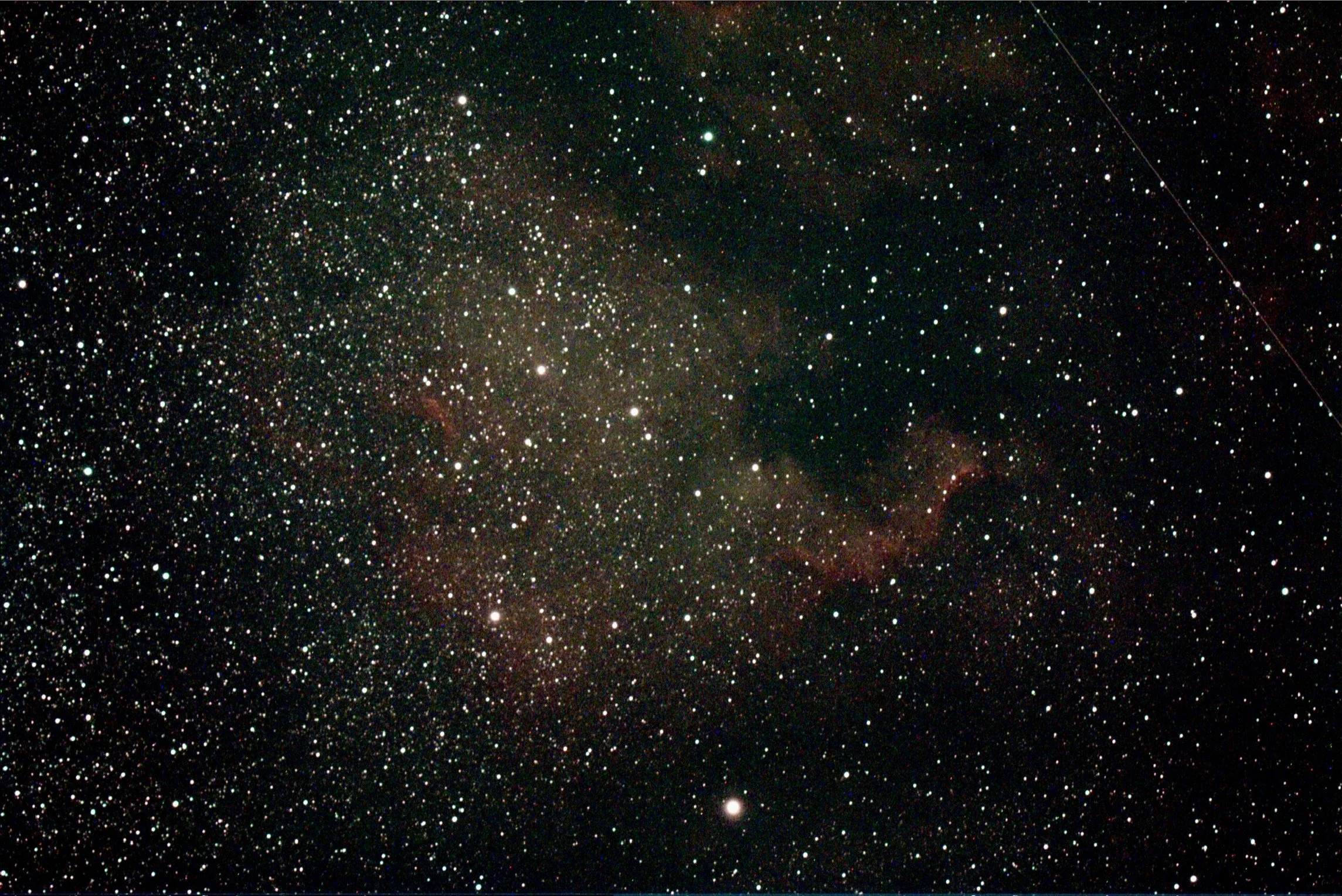
NGC 7000 North America Nebula
Integration: 5 minutes (10 x30s)
Equipment: Askar FRA300/5.0 APO • Astro Mod Canon 70D • Explore Scientific iEXOS-100-2
Filters: SVBONY SV240 multi-narrowband
Acquisition: ASIAIR
Processing: ASIAIR
Notes:
Captured on September 26, 2025. This began as a quick SV240 test on the North America Nebula, only a few minutes of sky. Yet even with such a short integration, the continent shape and the dark Gulf rose cleanly from the frame. The result was surprisingly clean and aesthetically pleasing, enough to include in the gallery. It’s a small reminder that the night doesn’t need to be perfect to offer something beautiful — only generous enough to let a little light through.
Why this test worked so well. This frame was captured with an astro‑modified Canon 70D and the SVBONY SV240 multi‑narrowband filter. The 70D’s internal IR‑cut filter was removed, so it can record not only H‑alpha and OIII, but also the extended red and near‑IR light that the SV240 passes beyond 700 nm. That extra sensitivity gives the North America Nebula a surprising boost—faint emission and structure rise out of the background much faster than they would on a one‑shot color camera with a built‑in IR‑cut window.
The result is that even a quick 5‑minute test (10×30 s) was enough to reveal the continent shape and the dark Gulf cleanly. It’s a nice reminder that the right combination of filter, sensor, and sky can turn a “throwaway” test into a keeper.
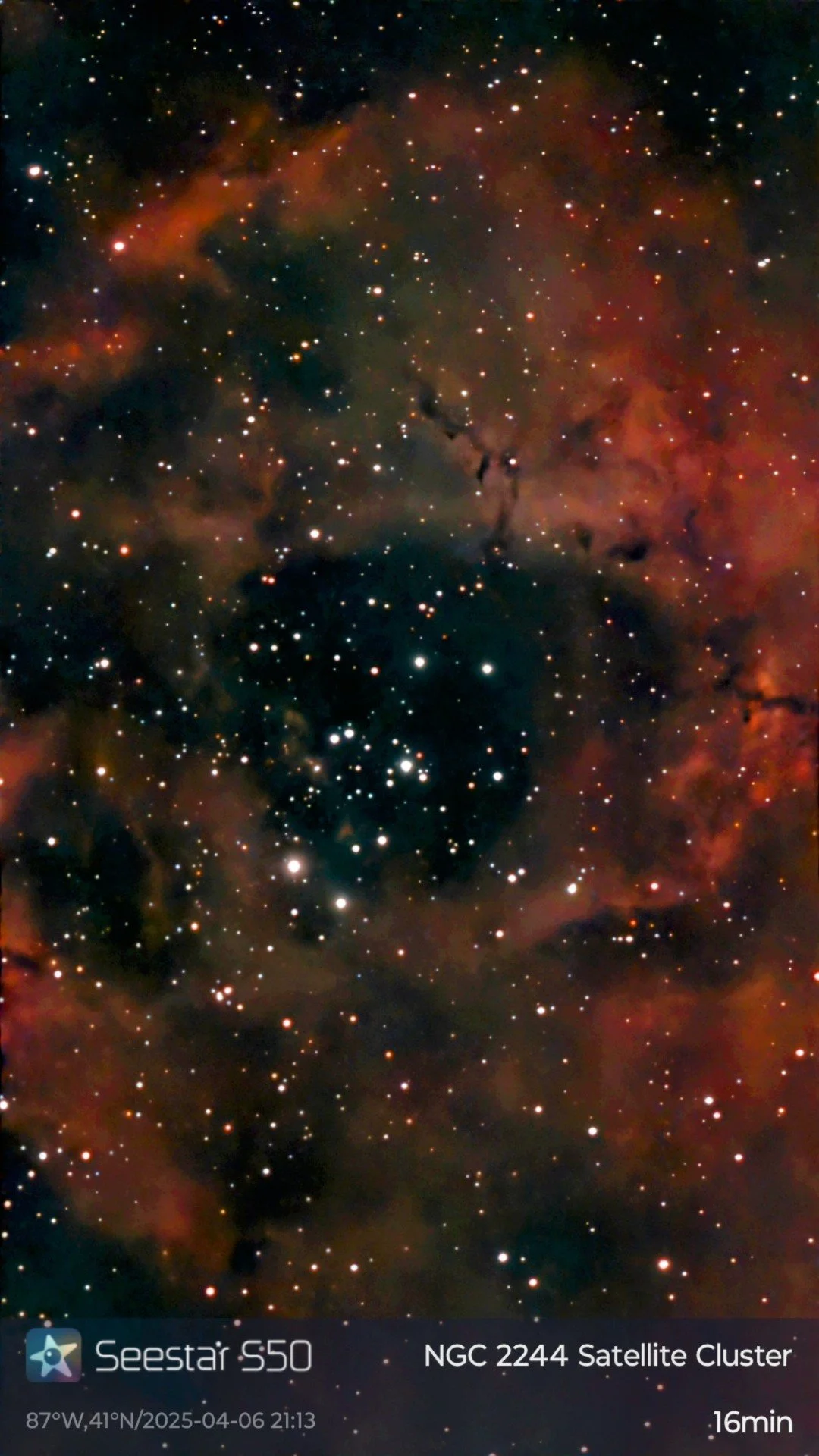
NGC 2237 Rosette Nebula & NGC 2244 Satellite Cluster
Integration: 16 minutes (31 × 30s)
Equipment: Seestar S50
Filters: Internal Dual Band
Acquisition: Seestar S50
Processing: Seestar S50
Notes:
Captured on April 6, 2025. While the resolution isn’t on the level of a dedicated astrophotography rig, the Seestar continues to impress within the limits of its small 250 mm optics and integrated camera. It’s remarkable how many deep‑sky objects this little system can record with minimal effort.
What makes the Rosette especially meaningful for me is that the Seestar is what launched me onto my current path. Its simplicity and surprising capability showed me what was possible, and it pushed me to build a more intentional, modular imaging setup. My FRA300 at 300 mm, paired with the ASI585MC‑Air, guided on the iEXOS‑100‑2, mirrors the Seestar’s wide‑field approach but with better optics, a larger sensor, and the flexibility of interchangeable filters. The result is a system that costs about four times as much, but delivers performance on an entirely different level: cleaner stars, deeper signal, and far more control over acquisition and processing.
Still, the Seestar deserves a lot of credit. It’s a reminder of how far compact, all‑in‑one astrophotography has come—and how a small, approachable tool can open the door to a much larger journey.
It’s fitting that the Rosette — a nebula shaped by stellar birth — marks the beginning of my own path in astrophotography.
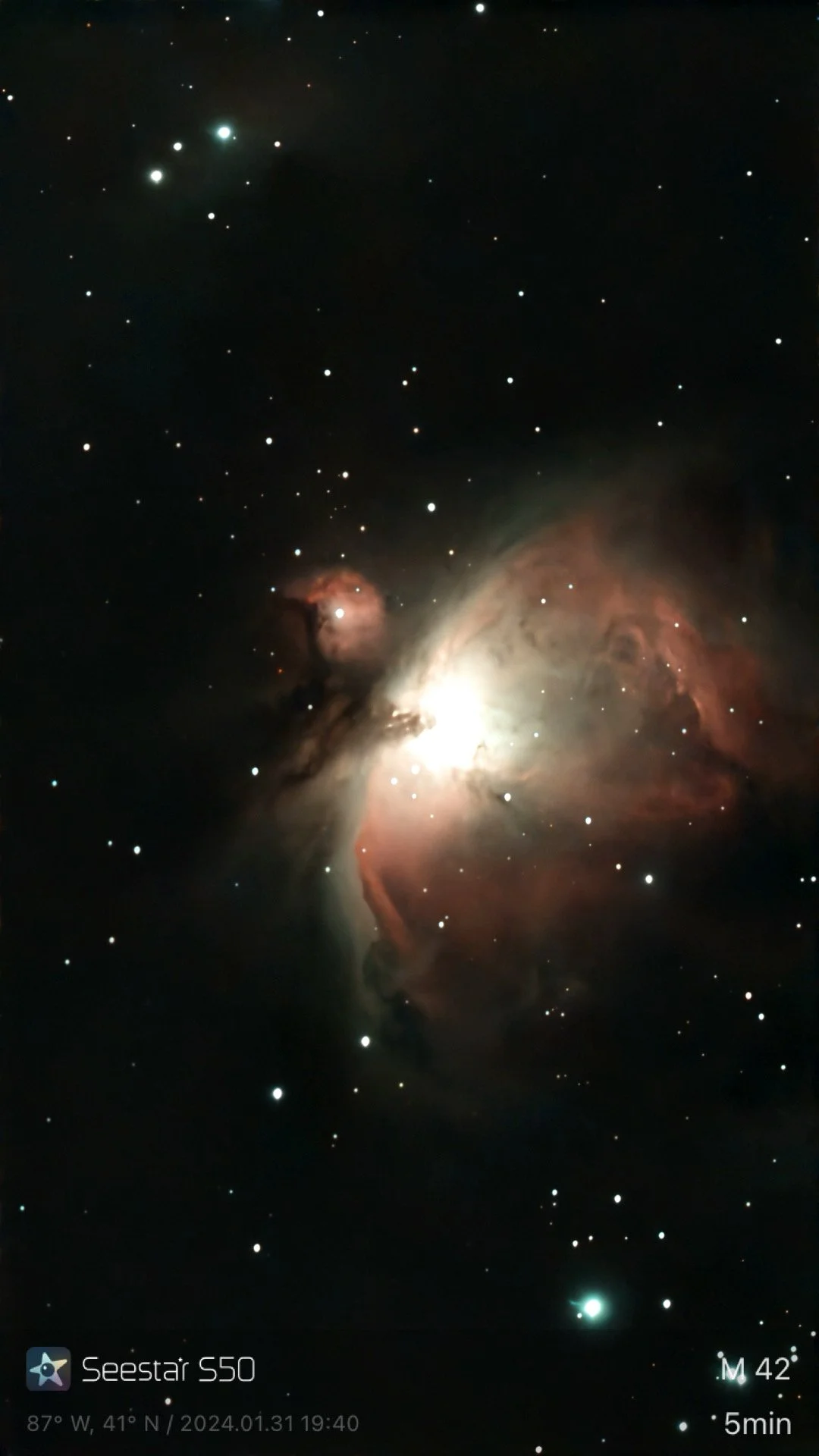
M42 Orion Nebula
Integration: 5 minutes (280 × 10s)
Equipment: Seestar S50
Filters: Internal Dual Band
Acquisition: Seestar S50
Processing: Seestar S50
Notes:
Captured on January 31, 2024. This was my very first astrophoto with the Seestar S50. When the image appeared on my phone, I thought it was pulled from the internet — it looked that good. The Orion Nebula is a classic first target for new astrophotographers, and now I understand why.
Explore More — Why Magnitude Lies, a small guide to understanding how extended light behaves under city skies.