Rosette Redux
Same 16 Minutes, New Ceiling
Field Note: revisiting the Rosette eight months later, with new tools and no new data
Back on February 11, I spent a quick 16 minutes on the Rosette Nebula from the park across from my house: 16 subs of 60 seconds each, captured the same night as the Horsehead. The setup was my usual one: Askar FRA300 on the Explore Scientific iEXOS-100, ZWO ASI585MC-Air, SVBONY SV220 7nm dual-band filter, all run from the ASIAIR. Gain 250, dithering every frame.
At the time, I was pleased with what I got. I processed it three ways in GraXpert, Siril and GIMP: a natural-color version, an HOO palette and a Hubble-style SHO palette using the custom Siril scripts I described in Painting with Light You Can't See. All three are still in the gallery, and I still like them.
This week I went back to the same data. Not one new photon, just new tools.
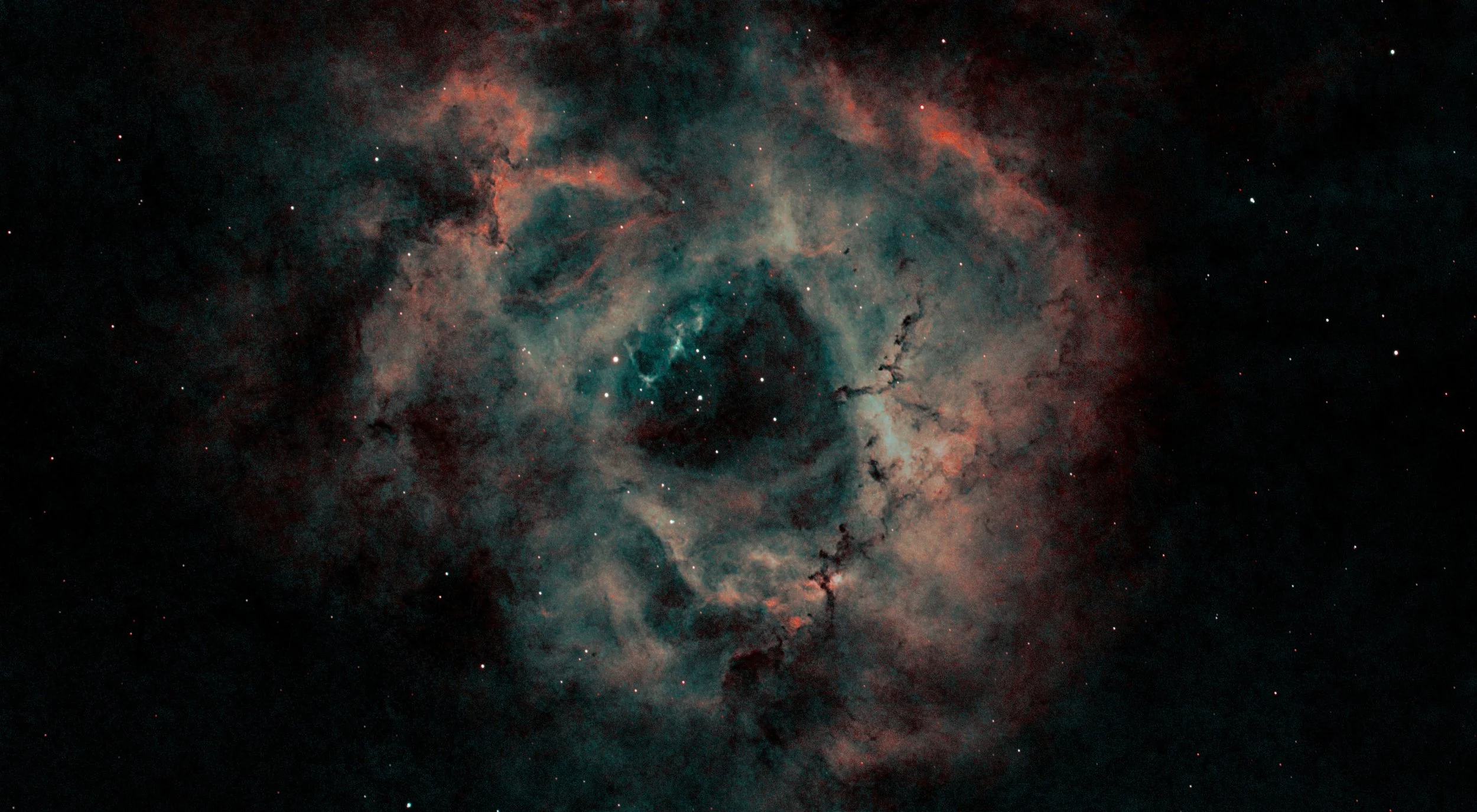
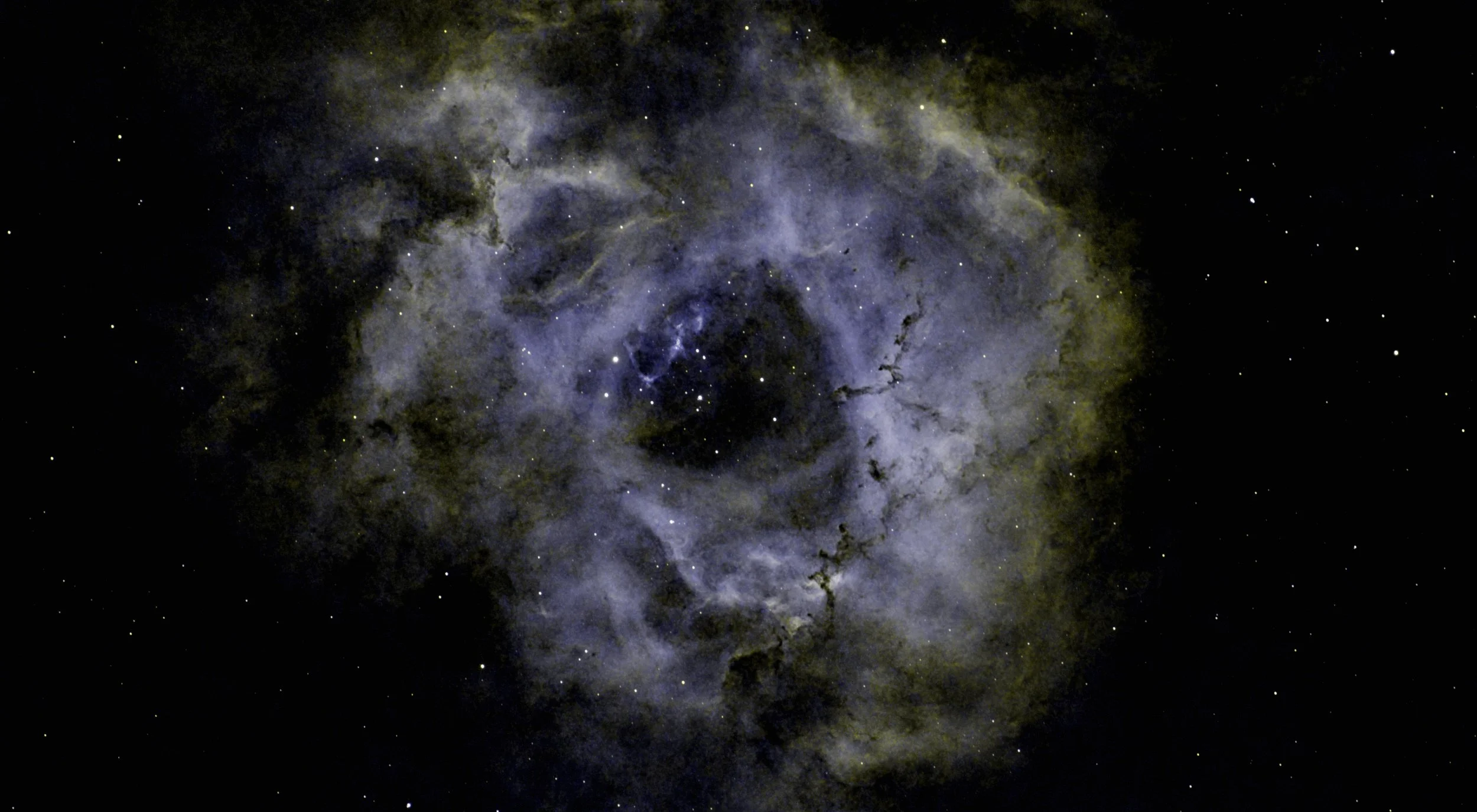
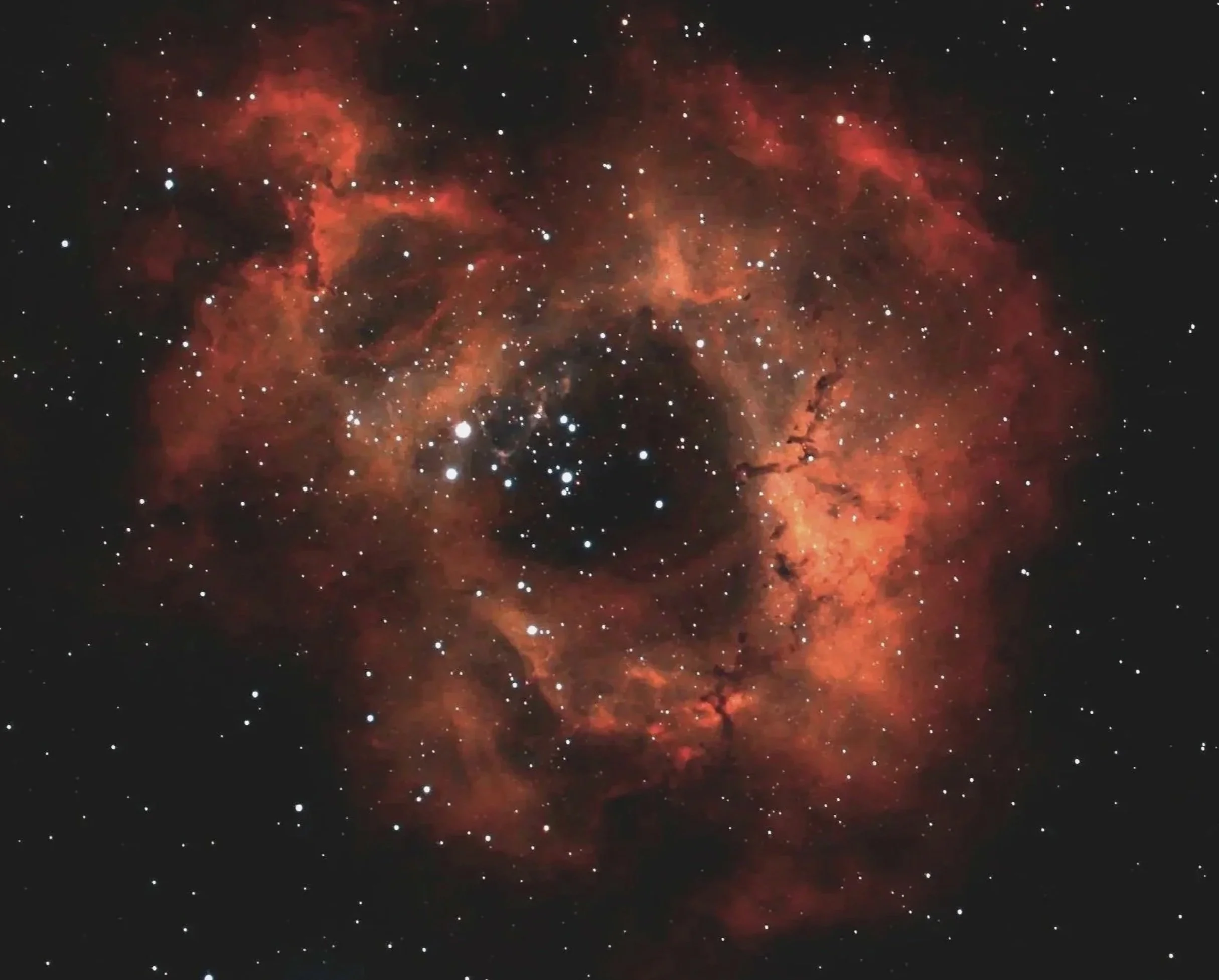
February 2026: the same 16 × 60 s processed in GraXpert, Siril and GIMP (HOO, SHO and natural color).
What changed
Two things. The first was AstroWizard, the free guided processing app I wrote about in Ten Minutes to Andromeda. It walks you through nine steps in order, and you can toggle each step back and forth until it looks right.
The second was RC-Astro's BlurXTerminator, NoiseXTerminator and StarXTerminator. I'd always considered these PixInsight tools, and PixInsight was a mountain I never tried to climb. They're now available as stand-alone tools, and AstroWizard calls them directly.
AstroWizard keeps a running log of every step, so I don't have to reconstruct the recipe from memory. Here's how the work divided up:
- AstroWizard ran the workflow: an auto-crop, an unlinked stretch picked by eye from a grid of previews, the HOO palette, and the final color work.
- GraXpert (AI background extraction, smoothing 0.5) removed the Bortle 9 gradient — the same tool I used in February, now called from inside AstroWizard.
- BlurXTerminator (strength 0.6) tightened the stars and sharpened the fine structure: the dark globules along the right side of the cavity and the filaments inside it.
- NoiseXTerminator (denoise 0.90, two iterations) smoothed the background and the faint regions, which matters a lot when you only have 16 minutes of signal.
- StarXTerminator separated the stars so the nebula could be processed on its own, then the stars were blended back in at the end.
Those RC-Astro and GraXpert numbers are AstroWizard's defaults. You can adjust them all, but I didn't need to. From loading the stack to putting the stars back took about twenty minutes, most of it spent looking rather than clicking.
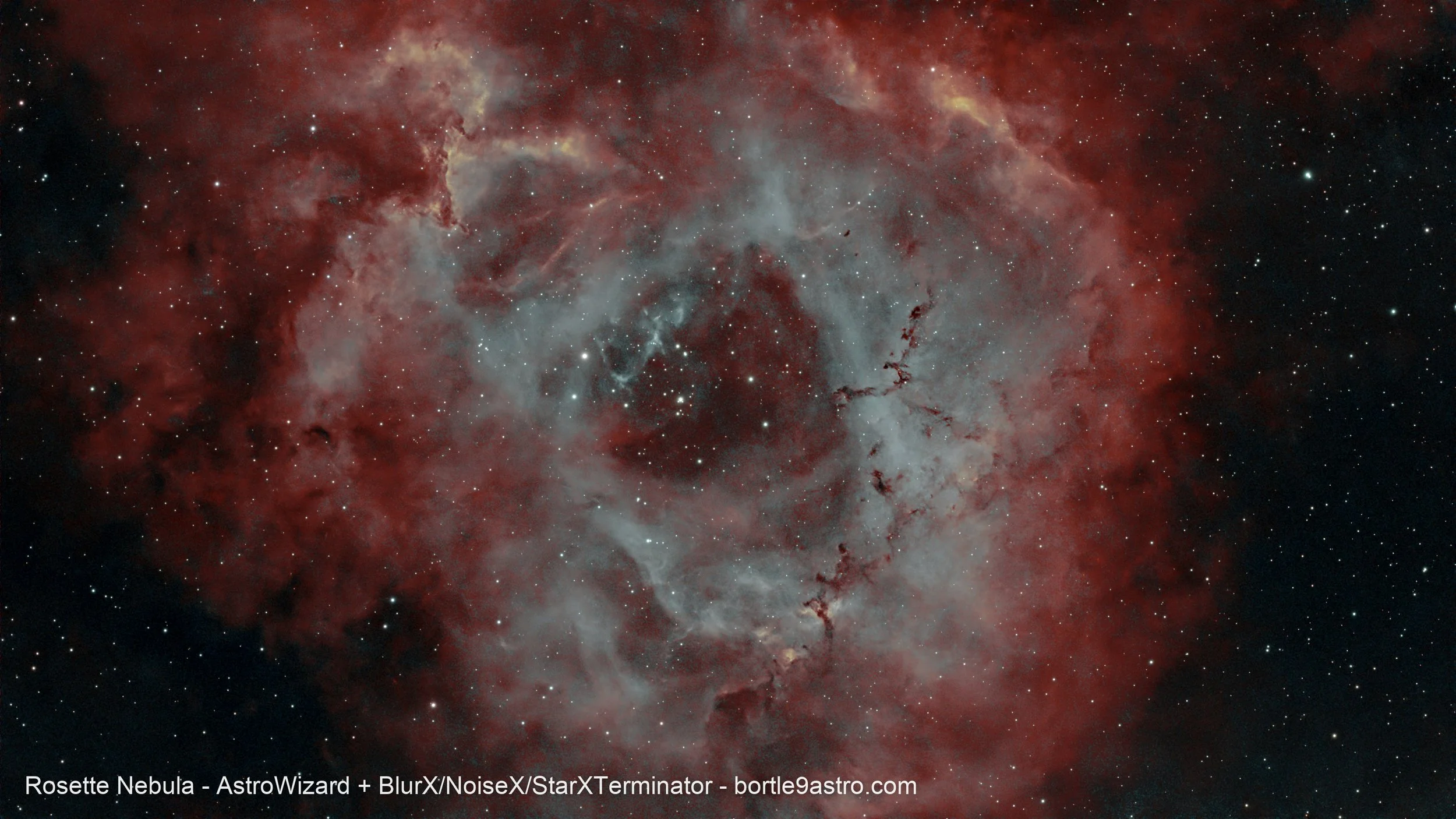
October 2026: the same data in AstroWizard (HOO palette) with GraXpert, BlurXTerminator, NoiseXTerminator and StarXTerminator.
Three tries to get it right
I didn't nail it on the first pass. My first version was impressive, but the gold highlights along the top edges were pushed hard enough to look blotchy, and the contrast was about at its limit. The second time I pulled everything back, and went too far: the reds turned brick-brown and the nebula started to blend into a slightly reddish sky. The third version used a darker sky and a little more restraint, and that's the one I'm keeping.
The log tells the story better than I can. On the second pass I stacked up a string of color “spells” — Yellow to Copper & Gold, Blue to Teal, Add Warmth, Dynamic Pop — then undid most of them and rebuilt the color more gently. The third version was just two clicks of Darker Sky.
That's familiar territory for an old calibration engineer: overshoot, undershoot, then settle in the middle. What surprised me was how easy AstroWizard makes it. In Siril, each round would have meant redoing a chain of steps. Here, it was a few button clicks and a careful look.
What I'm taking away
The data I captured in February was always better than the images I made from it. The bottleneck wasn't the telescope, the camera or even the Bortle 9 sky. It was the processing. A software license that improves every image from every scope I own turned out to be a better investment than the third telescope I nearly bought.
There's a nice side effect too: every dataset in my archive just became worth another look. Cloudy Chicago winter nights now have a use.
Where's the ceiling now?
I keep a self-imposed one-hour limit on integration time. This image used about a quarter of that. Signal-to-noise improves with the square root of integration time, so a full hour would roughly double it. That should bring out the faint outer shell of the Rosette on its own and let NoiseXTerminator and BlurXTerminator work more gently.
The Rosette is well placed this winter, so the follow-up will be the same target, a full hour, the same workflow. I'm curious where the new ceiling is.
AstroWizard: astrowizard.lukomatico.com
Clear skies / Pete // bortle9astro.com