The $140 Seestar Upgrade
Why a $140 Filter Made My Seestar Look Like a Different Telescope
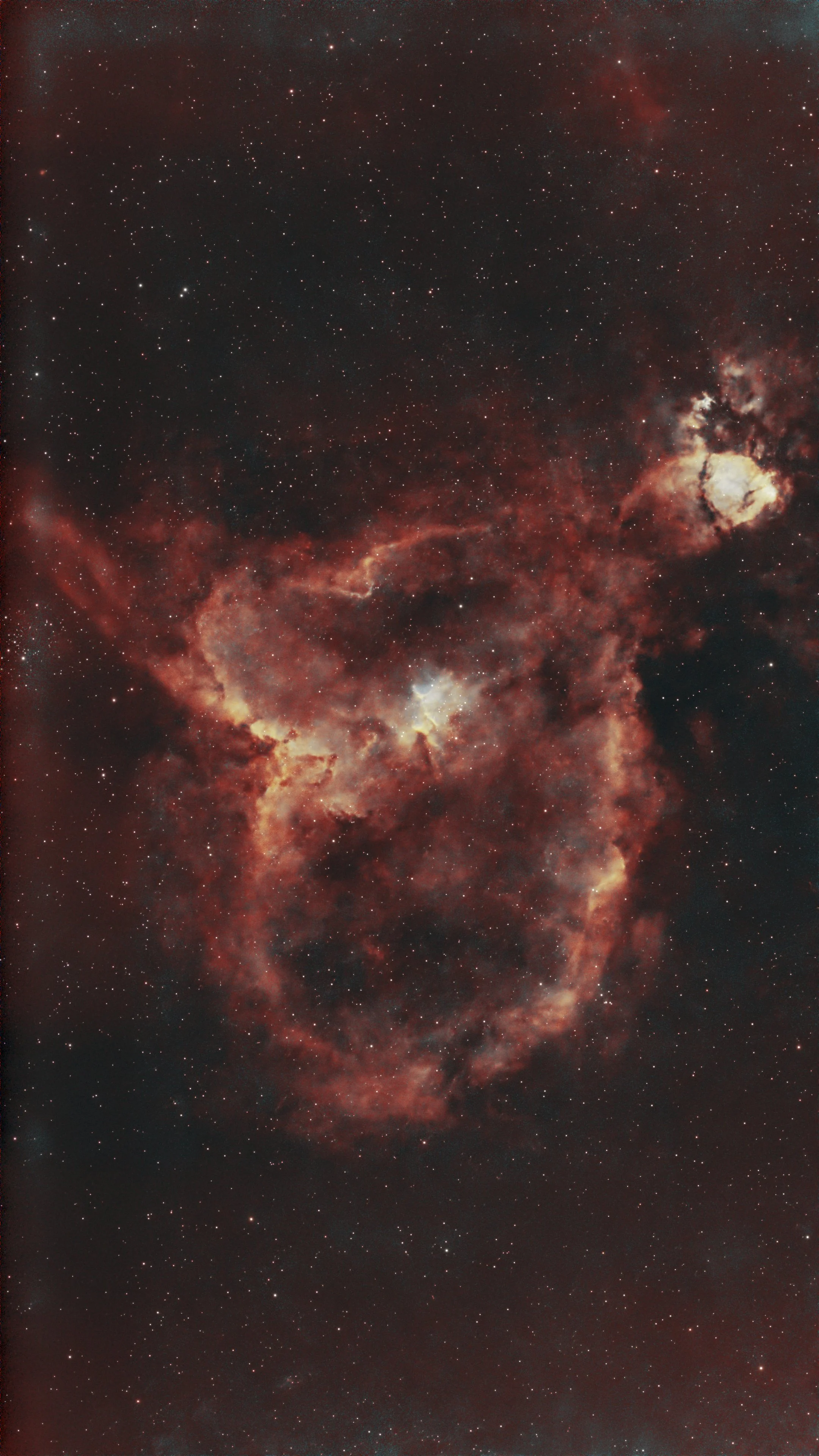
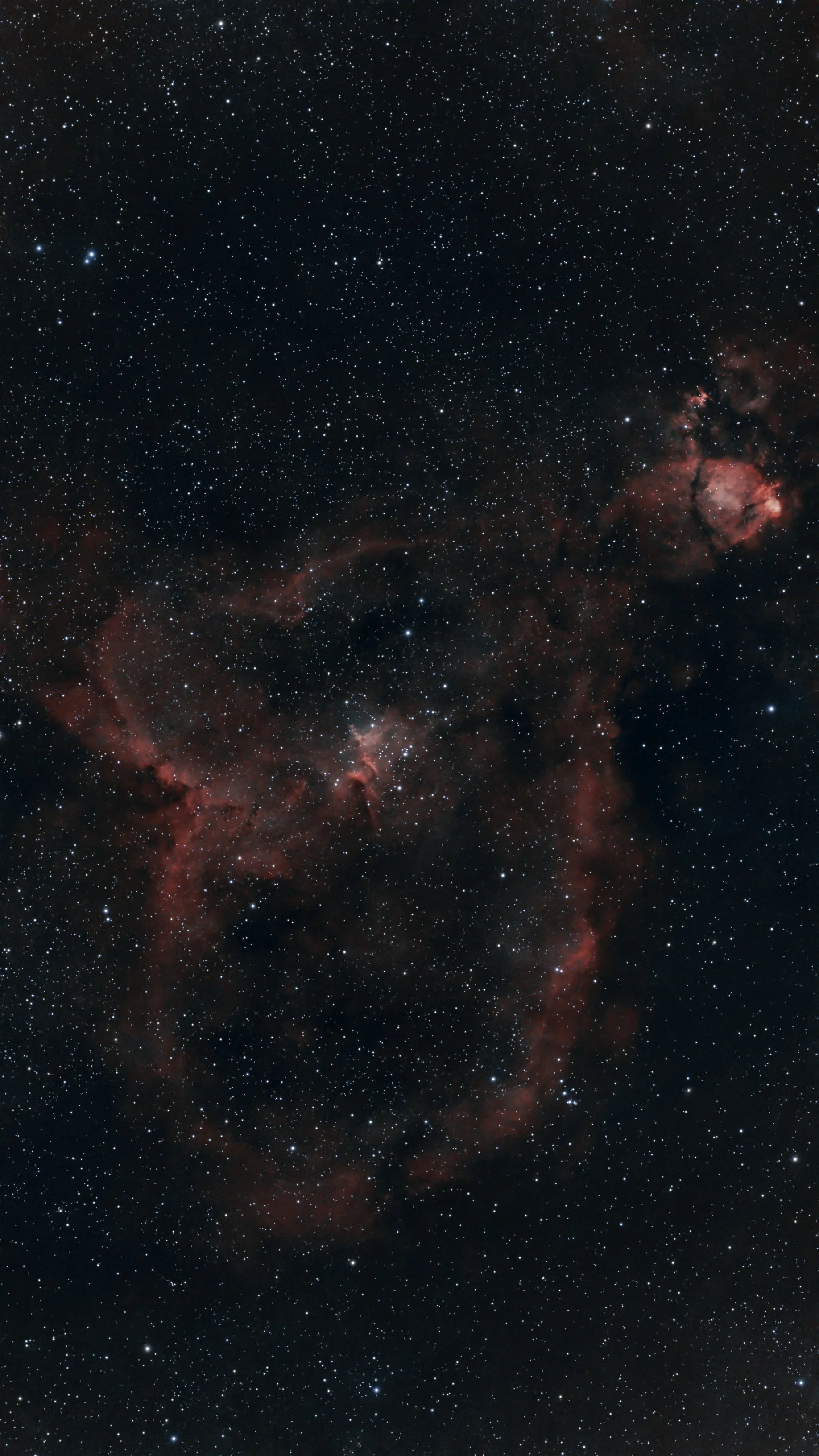
Field Note: same night, same park, same processing, two filters on the Heart Nebula
The test was simple. I imaged the Heart Nebula (IC 1805) with my Seestar S30 Pro, once through its built-in light pollution filter and once through an external SVBONY SV220 7 nm dual-band filter, then processed both stacks the same way.
I expected the SV220 to win. I didn’t expect it to win like this. The SV220 Heart is bright, full of structure, and sits on a dark sky. The internal-filter version looks faint and washed out next to it.
What puzzled me is that the numbers didn’t seem to predict it. When I measured the two stacks, overall signal-to-noise came out roughly equal, with the SV220 only about 20% ahead on Hα. Twenty percent doesn’t sound like the difference between these two pictures:
So what’s going on?
Why the gap looks bigger than the numbers suggest
A stretch doesn’t respond to signal-to-noise. It responds to how bright the nebula is compared with the sky around it.
That’s the whole story, really. Both filters pass the Hα line from the Heart almost equally well. Where they differ is how much city glow comes along for the ride. The S30’s internal filter has passbands about 30 nm wide at OIII and 20 nm wide at Hα. The SV220’s are 7 nm each. Every extra nanometer of window is another nanometer of LED and sodium light from the Chicago sky landing on the sensor.

Run the arithmetic on that model and the SV220 passes only about 30% as much sky glow as the internal filter, while passing essentially the same Hα from the nebula. That works out to roughly 3.5× better nebula-to-sky contrast. When both images get the same stretch, the SV220 nebula is lifted well clear of its background, and the internal-filter nebula is lifted right along with a bright sky. You could push the LP stack harder, but you’d be stretching the sky with it. It would never look this clean.
The stars tell the same story
The internal-filter stack showed about twice as many stars. That’s not a better image; it’s the same effect. Stars are broadband light, just like sky glow, so a wider window lets more of them through. All those extra stars eat up brightness range in the stretch, which leaves less room for the nebula.
Was it a fair fight?
I processed both with the same AstroWizard workflow: same “custom” stretch (factor 150), same color steps. A few small differences crept in. The SV220 run skipped the 7.5% crop, got one extra Background Darker pass, and both got three Blue-to-Teal passes instead of the two on my card. None of those come close to explaining a gap this large.
What I don’t fully understand yet
If the sky really dropped to a third, a purely sky-limited image should have gained more than 20% in signal-to-noise. Something closer to 1.8× would be the textbook expectation. I have a few suspects: the SNR estimate is taken across the whole frame including stars, the 7 nm filter costs a little Hα at the edges of the band on a fast little lens, and my subs may not be fully sky-limited through the narrow filter. I don’t have an answer yet. If you do, I’d like to hear it.
The bigger point
Being able to transform the S30 with a filter that costs less than the dew heater on some scopes was a revelation to me. I suspect external filters for smart scopes are under-appreciated, especially by people who assume the built-in “LP” filter has already handled light pollution. It handles some of it. Under a Bortle 9 sky, the width of the window matters a great deal.
A few honest caveats:
- Emission nebulae only. The SV220 helps Hα and OIII targets. On galaxies, star clusters and reflection nebulae it will make things worse, not better.
- The darker your sky, the smaller the win. In Bortle 5 the internal filter already has less glow to fight. The advantage should shrink, though I’d expect it to remain visible.
- Autofocus fails through the SV220 on my S30 Pro. I focus without it, then mount the filter.
Next on the list: the same comparison with a sky-glow spectrum actually measured from my park instead of a modeled one.
Pete // bortle9astro.com